How to Trade in Steal a Brainrot (2026): Complete SAB Trading Guide
A complete beginner-to-intermediate guide to SAB trading — how trades work in Steal a Brainrot, where to trade, how to avoid scams, and what actually makes a brainrot valuable.
Social Share or Summarize with AI
On this page
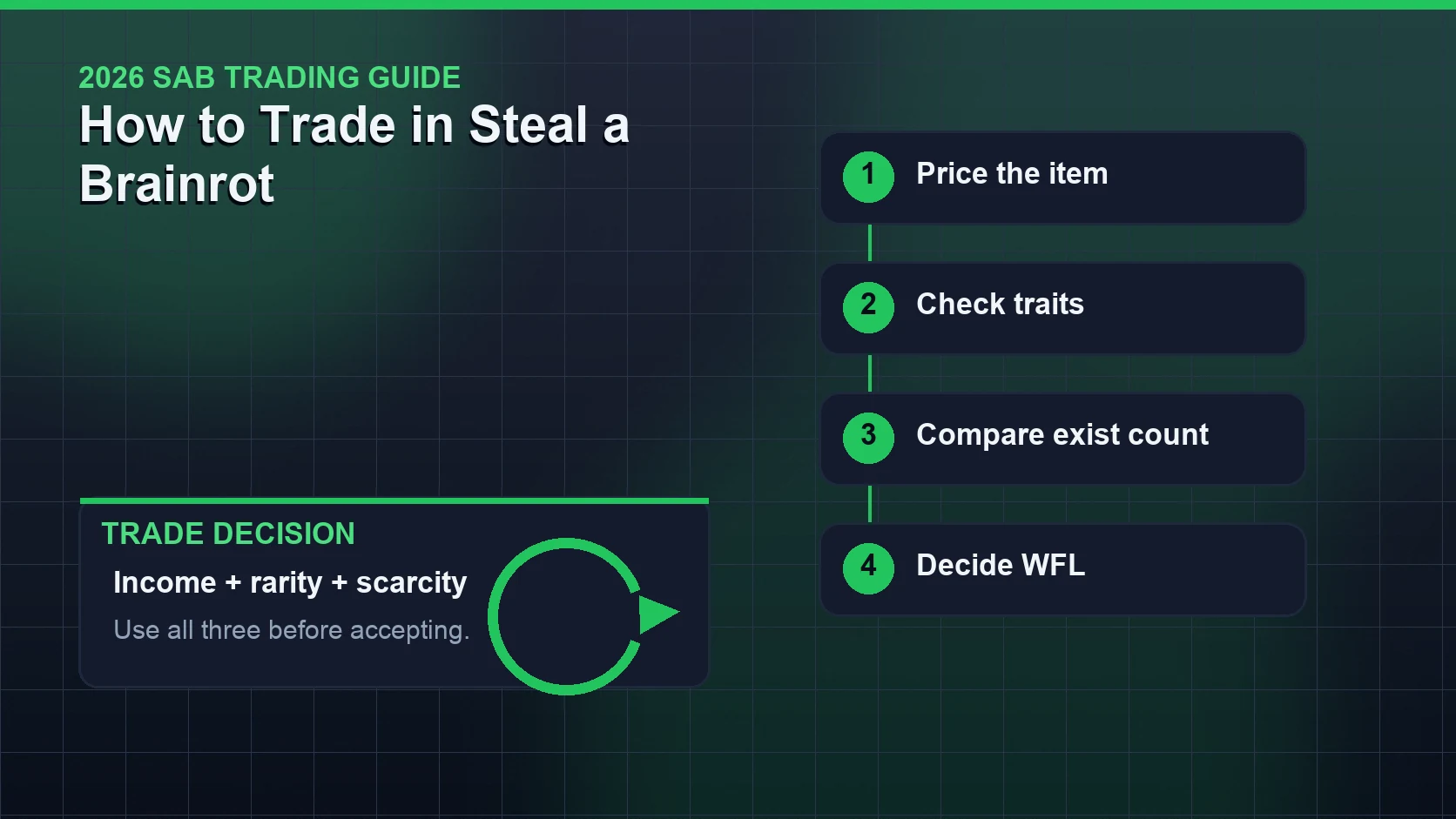
Searching for SAB trade or SAB trading usually means one of two things: you either want to know how trading actually works in Steal a Brainrot, or you want to know how to stop losing value on every deal. This guide covers both — the mechanics of making a trade in SAB, and the habits that separate traders who grow their collection from traders who get farmed.
How Trading Works in Steal a Brainrot
Trading in Steal a Brainrot lets two players exchange brainrots directly. Instead of stealing or grinding for a specific brainrot, you can offer items from your own base in return for the items you actually want. Since the June 13, 2026 patch, trading is accessed from a GUI button instead of the old Trade Machine flow, and Seasonal Base Skins can be included in trades. Every completed trade is final, which is exactly why understanding the process before you accept matters so much.
The core loop looks like this:
- Find a trading partner. You can trade with players in your current server, or join servers and communities dedicated specifically to trading (more on those below).
- Send or accept a trade request. Use the trading button in the game interface. Once both players agree to trade, the trade window opens with two sides — yours and theirs.
- Add brainrots to the trade. Each player places the items they're offering. Pay close attention to mutations and traits here: two copies of the same brainrot can have very different values depending on what's attached to them.
- Review both sides. This is the step most players rush. Before you confirm anything, check what each side is actually worth — not what the other player tells you it's worth.
- Both players confirm. Once both sides accept, the trade executes and the brainrots swap owners. There is no undo button.
If you take only one thing from this guide: never confirm a trade you haven't valued yourself. The SAB trading calculator exists precisely for step 4 — it takes about 30 seconds and catches the vast majority of bad deals before they happen.
Where to Trade: Servers and Communities
Random in-game servers work for casual trades, but serious SAB trading happens in dedicated spaces:
- Trading-focused servers. Servers where most players are there specifically to trade move much faster than regular gameplay servers. You'll see more offers per minute and a wider range of brainrots on the market.
- Discord trading communities. Most large SAB communities run trade channels organized by rarity or by what players are looking for ("LF" = looking for, "FT" = for trade). These are also where demand shifts show up first — if a brainrot suddenly floods the LF channels, its real trade value is climbing before any value list catches up.
- In-game friends. Repeat trading partners you trust are underrated. Fair traders remember each other, and good deals tend to flow toward players with a reputation for not lowballing.
SAB Trading Etiquette (Why It Affects Your Profits)
Etiquette in SAB trading isn't just politeness — it's strategy. Communities are small enough that reputations stick:
- Don't spam lowball offers. Repeatedly offering obviously bad trades gets you ignored, blocked, or removed from trading servers. One fair trade with a returning partner is worth more than ten failed lowballs.
- State what you're offering clearly. Mention mutations and traits up front. Hiding a missing mutation until the trade window opens wastes everyone's time and marks you as someone to avoid.
- Walk away politely. "Not for me, thanks" keeps the door open. The player who declined your offer today might have exactly what you need next week.
How to Avoid SAB Trade Scams
Most losses in SAB trading don't come from scams in the technical sense — they come from information gaps. The other player simply knows the values better than you do. Here's how to close that gap:
- Value every trade independently. Run both sides through the trade calculator before responding to any offer. If the verdict is Bad, the answer is no — regardless of how the deal is framed.
- Watch for artificial urgency. "Accept now or I'm offering it to someone else" is the oldest pressure tactic in trading games. A genuinely fair deal survives a 30-second value check.
- Verify mutations and traits in the trade window. What a player says they're offering and what actually appears in the window are not always the same. Check the actual items before confirming.
- Be skeptical of "trust trades". Any deal that requires you to give first and receive later is a deal designed for you to lose. Legitimate trades happen inside the trade window, both sides at once.
- Cross-check rarity claims with exist counts. "This is super rare" is easy to say. Actual exist count data tells you how many copies are really in circulation — a brainrot with a high exist count is not rare, no matter what the seller claims.
What Makes a Brainrot Worth Trading For
Value in SAB trading comes from a few stacking factors:
Seasonal Base Skins
Seasonal Base Skins are now part of the trade market. Treat them separately from brainrots when judging a deal: a base skin can add cosmetic demand, but it does not automatically make a trade fair if the brainrot side is weak. When a bundle mixes brainrots and base skins, price the brainrots first, then decide how much extra value the skin really adds.
Rarity and Exist Count
Rarity tier sets the baseline, but exist count — how many copies of a brainrot actually exist across all players — is what separates genuinely scarce items from common ones wearing a rare label. A Legendary with a huge exist count can trade below an Epic that's genuinely hard to find. See how exist count affects trade value for the full breakdown.
Mutations and Traits
Mutations and traits multiply a brainrot's worth, sometimes dramatically. Trading away a mutated brainrot at base value is the single most common expensive mistake new traders make. Our mutation and trait value guide covers which modifiers matter most.
Demand
Demand moves daily. New update drops, popular YouTubers featuring a brainrot, or a craft recipe requiring a specific item can all spike demand overnight. This is why static value screenshots go stale fast, and why live tools beat saved lists.
A Simple Pre-Trade Checklist
Before you hit confirm on any SAB trade, run through this:
- Did I add both sides to the calculator with correct mutations and traits?
- Is the verdict Fair or Good for me?
- Did I verify the actual items in the trade window match what was promised?
- Am I trading because the deal is good — or because I'm being rushed?
Four questions, under a minute, and they eliminate nearly every regret trade.
Conclusion
SAB trading rewards players who treat it like a market, not a lottery. Learn the trade flow, build a reputation for fair offers, verify every item in the window, and never confirm a deal you haven't valued yourself. The tools are free — the SAB trading calculator for valuing deals, and the exist count tracker for checking real scarcity. Use them on every trade and the wins compound.